Advanced

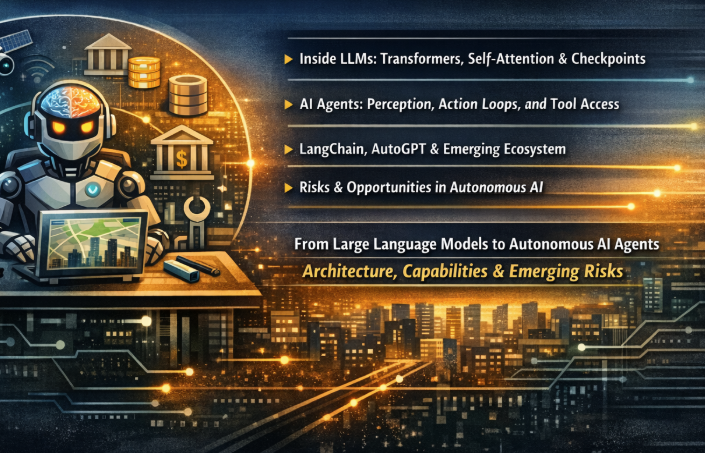
From Large Language Models to Autonomous AI Agents — Architecture, Capabilities, and Emerging Risks

arge Language Models are stateless, single-pass prediction engines — powerful but passive. Wrapping them in a perception–action loop with environment access and tool use transforms them into something qualitatively different: autonomous AI agents. This post walks through the transformer architecture (embeddings, self-attention, likelihood, checkpoints, contextual memory), explains how the agent paradigm introduces closed-loop reasoning over environments and tasks, surveys the growing toolkit ecosystem (LangChain, AutoGPT, OpenClaw, Claude Code), and examines the emerging risk landscape — from social-agent platforms like Moltbook to physical-world interfaces like Rent a Human, where agents can coordinate human workers across compartmentalized tasks that no single participant can see as part of a larger plan.
2026-02-19T18:40:05+00:00February 19, 2026|Categories: Advanced|Tags: , , , , , |0 Comments

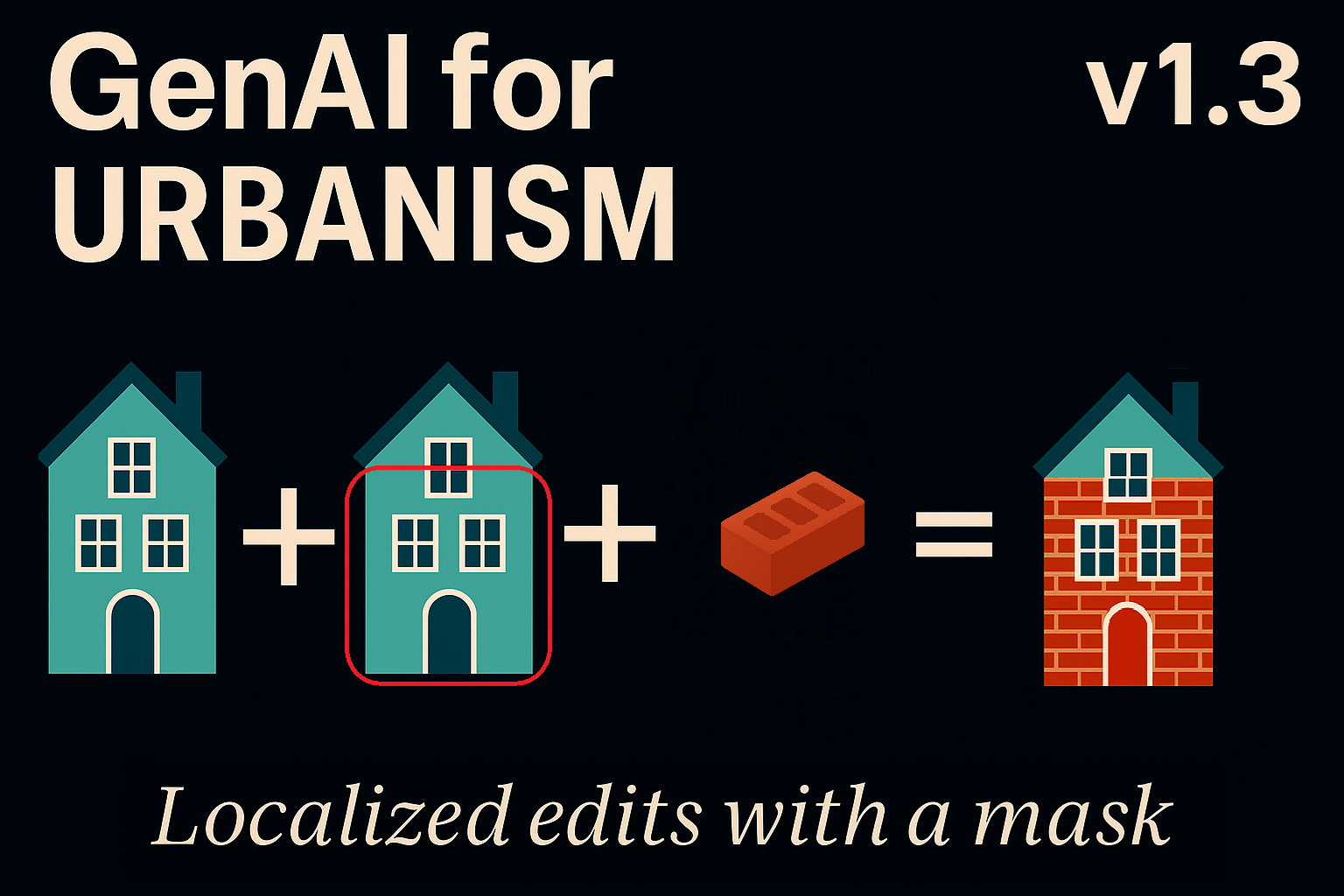
Qwen Image Edit for Urbanism v1.3 — Mask-Controlled Editing With Prompt or Reference Guidance

Version 1.3 of Qwen Image Edit for Urbanism introduces mask-controlled editing in ComfyUI, enabling precise, localized image transformations using prompts or reference images. The new Grow Mask utility softens boundaries, preserves unmasked areas, and integrates seamlessly with existing single-image and sequential workflows.

2025-12-04T22:18:54+00:00December 4, 2025|Categories: Advanced, Diffusion Models, Urbanism|Tags: , , , |0 Comments

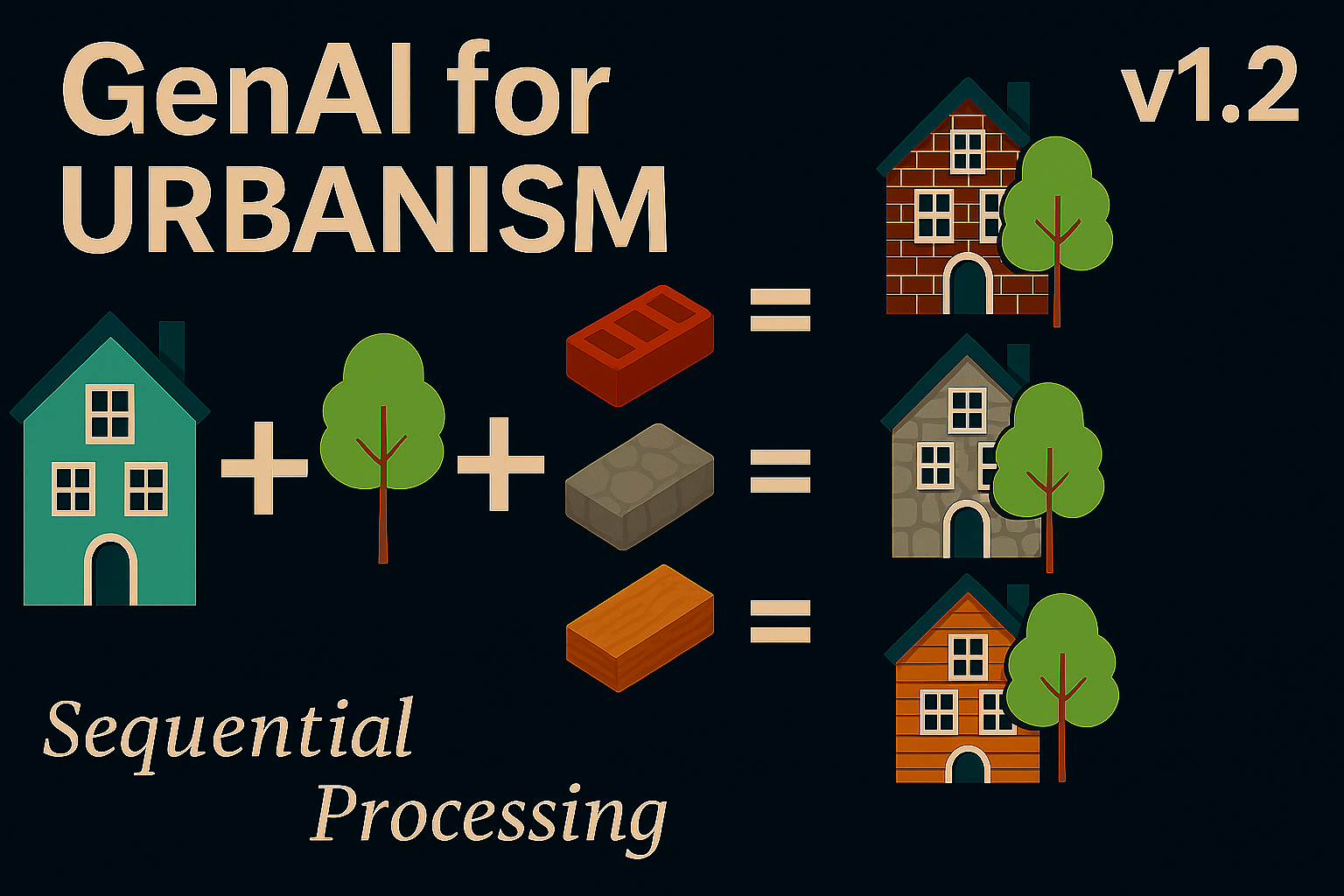
Qwen Image Edit for Urbanism v1.2 — Custom Nodes & Sequential Processing

ComfyUI Sequential Image Editing for Urbanism arrives in Qwen v1.2 with custom Python nodes, multi-image batch processing, and a six-slot buffer for reproducible urban edits. This version streamlines automated workflows for researchers, designers, and architects working with street and neighborhood imagery.

2025-12-04T20:14:41+00:00November 17, 2025|Categories: Advanced, Diffusion Models, Urbanism|Tags: , , , |Comments Off on Qwen Image Edit for Urbanism v1.2 — Custom Nodes & Sequential Processing

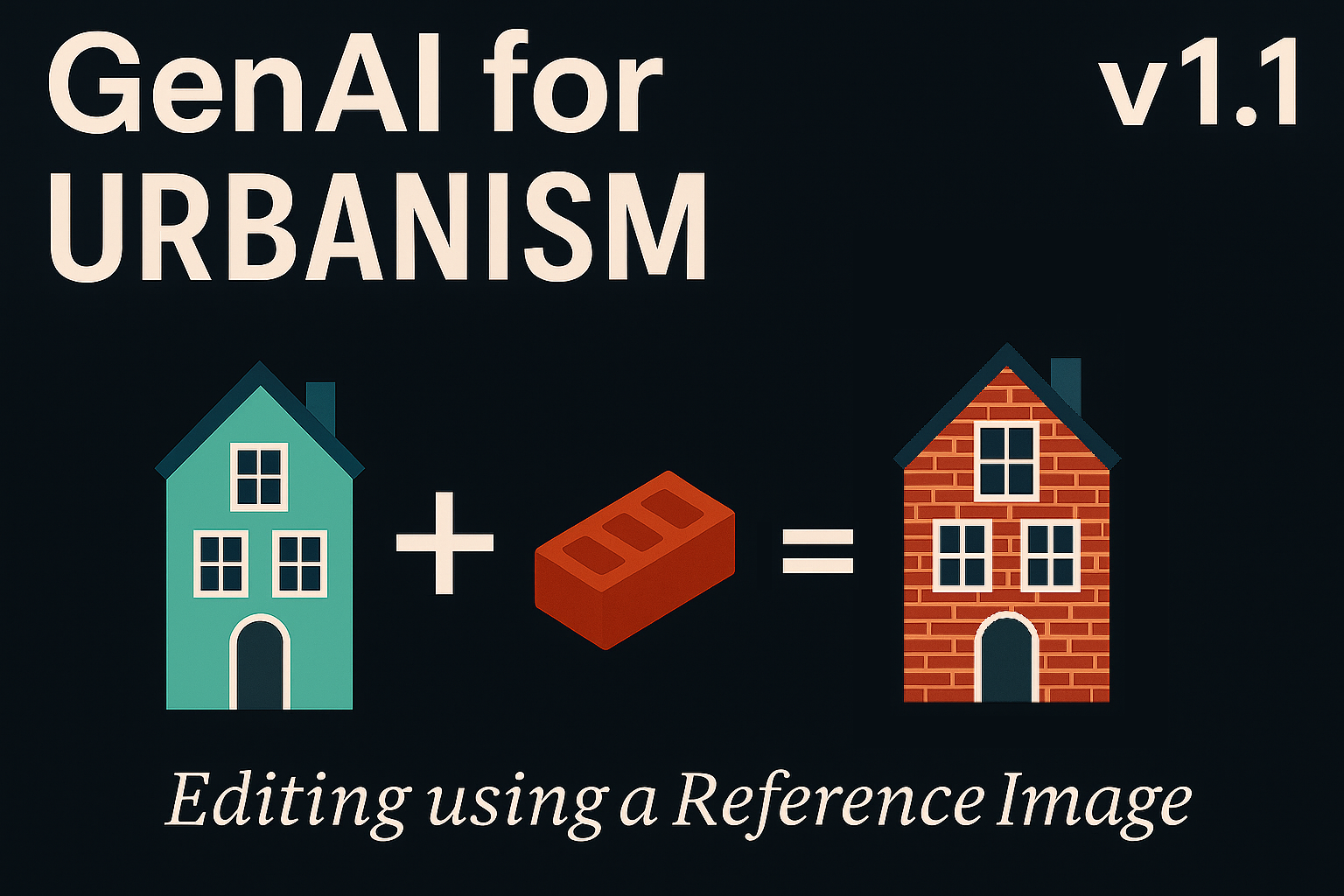
Qwen Image Edit for Urbanism v1.1 — Editing using a Reference Image and Advanced Sampling

Qwen Image Edit for Urbanism v1.1 expands local AI editing in ComfyUI with advanced sampling and dual-image workflows. The new Lightning LoRA system improves realism, texture fidelity, and processing speed, enabling fast, privacy-preserving urban scene transformation—entirely offline.

2025-11-14T09:53:20+00:00November 12, 2025|Categories: Advanced, Diffusion Models, Urbanism|Tags: , , |0 Comments

Qwen Image Edit for Urbanism v1.0 — Building a Qwen Pipeline in ComfyUI

Learn how to build a fully local AI image-editing workflow for urbanism and architectural visualization using ComfyUI and Qwen-Image-Edit. This step-by-step guide runs entirely offline with GGUF models, providing fast, private, and realistic visual edits.

2025-11-13T23:46:53+00:00November 9, 2025|Categories: Advanced, Diffusion Models, Urbanism|Tags: , , |0 Comments

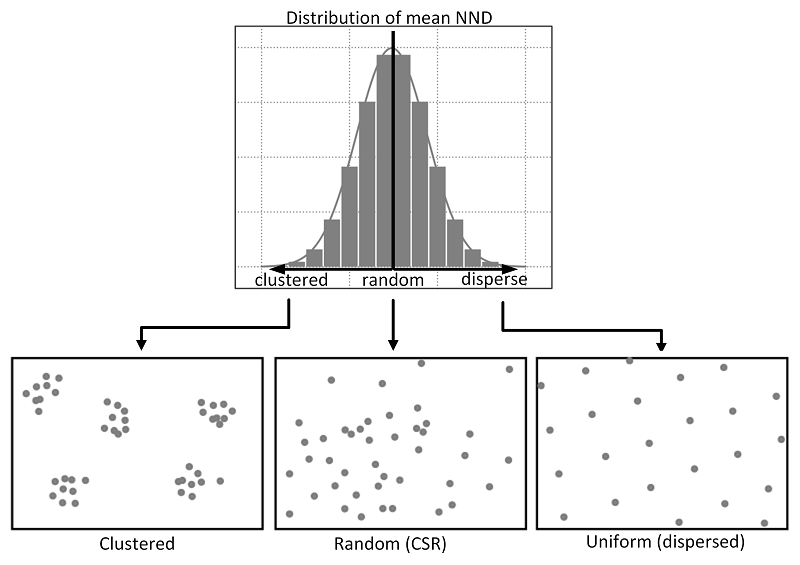
Exploring Spatial Patterns of Point Distributions using NDD and CSR

Calculating Nearest Neighbor Distance (NND) and comparing it with Complete Spatial Randomness (CSR) can be useful in various fields. In this tutorial, we will see together how to calculate a nearest neighbor distance from a given point pattern and compare it to a random distribution (CSR).