AI

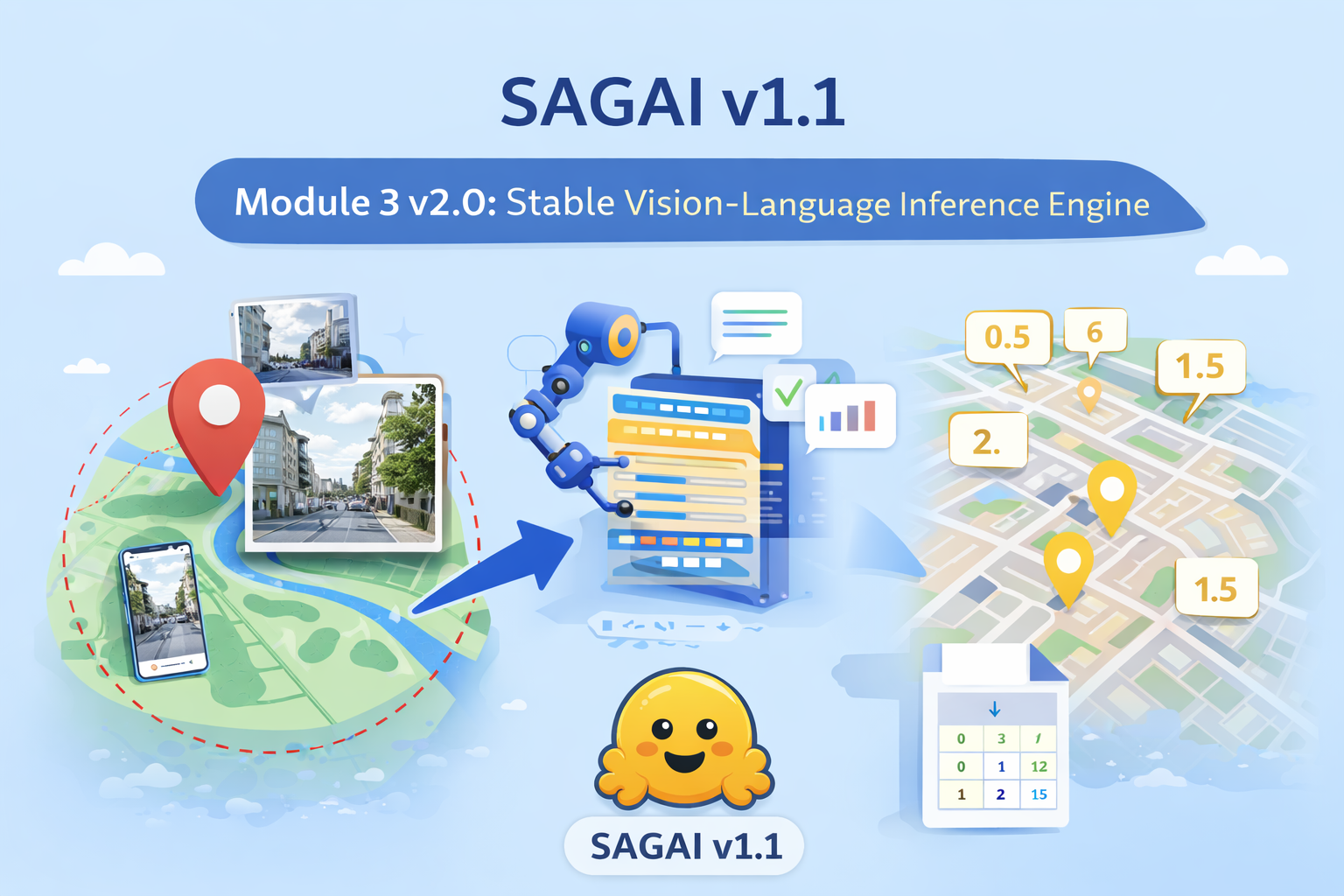
A Stable and Reproducible Vision–Language Inference Engine for SAGAI v1.1

SAGAI v1.1 introduces Module 3 v2.0, a stable and reproducible vision–language inference engine for streetscape analysis. Built exclusively on Hugging Face LLaVA models, it enables robust multimodal processing of street-level images for large-scale urban and geospatial analysis.

2025-12-17T17:07:11+00:00December 17, 2025|Categories: Python, Urbanism, Vision Language Model|Tags: , , , , |0 Comments

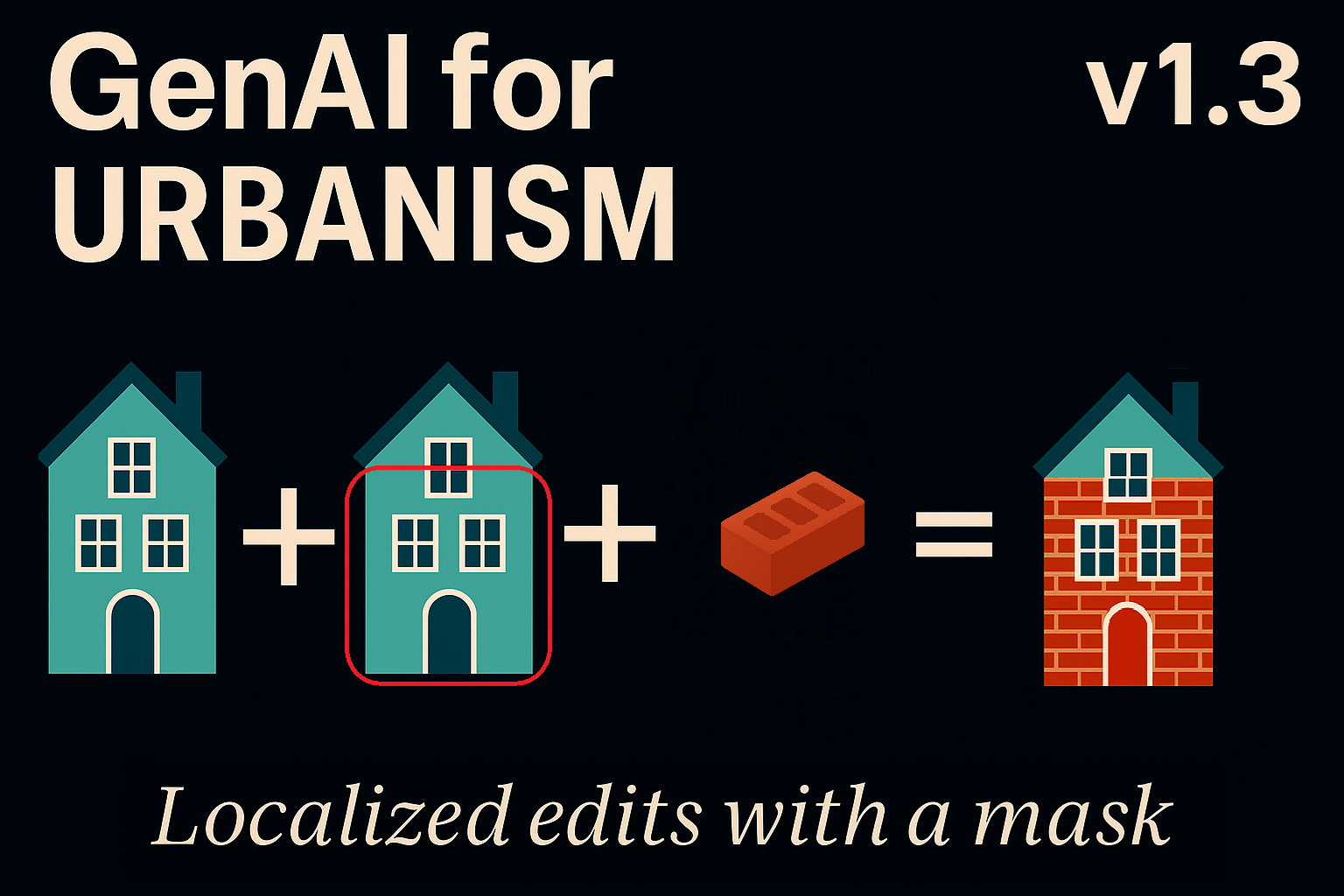
Qwen Image Edit for Urbanism v1.3 — Mask-Controlled Editing With Prompt or Reference Guidance

Version 1.3 of Qwen Image Edit for Urbanism introduces mask-controlled editing in ComfyUI, enabling precise, localized image transformations using prompts or reference images. The new Grow Mask utility softens boundaries, preserves unmasked areas, and integrates seamlessly with existing single-image and sequential workflows.

2025-12-04T22:18:54+00:00December 4, 2025|Categories: Advanced, Diffusion Models, Urbanism|Tags: , , , |0 Comments

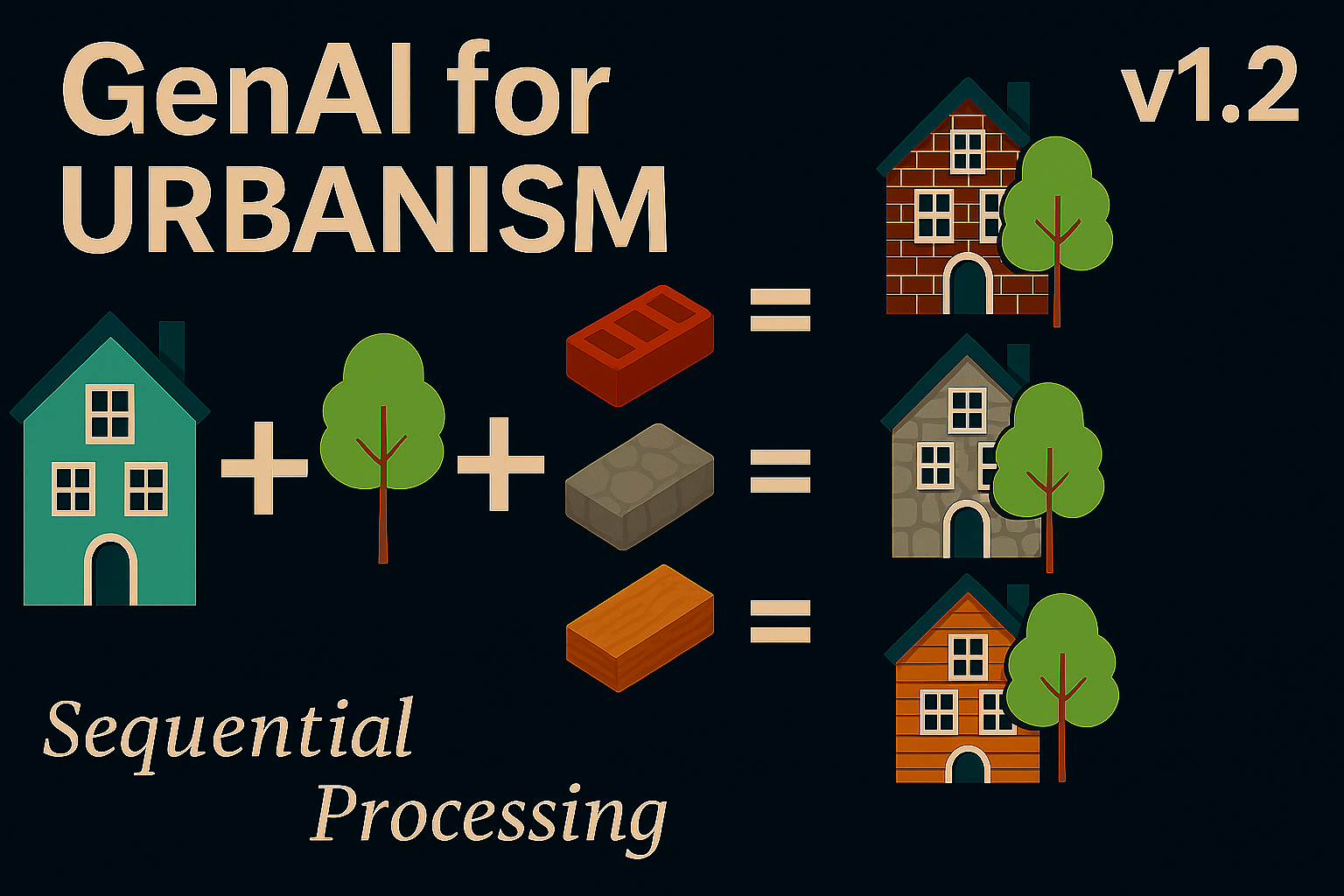
Qwen Image Edit for Urbanism v1.2 — Custom Nodes & Sequential Processing

ComfyUI Sequential Image Editing for Urbanism arrives in Qwen v1.2 with custom Python nodes, multi-image batch processing, and a six-slot buffer for reproducible urban edits. This version streamlines automated workflows for researchers, designers, and architects working with street and neighborhood imagery.

2025-12-04T20:14:41+00:00November 17, 2025|Categories: Advanced, Diffusion Models, Urbanism|Tags: , , , |Comments Off on Qwen Image Edit for Urbanism v1.2 — Custom Nodes & Sequential Processing

Getting Started with Python using Anaconda and Jupyter Notebook

In this guide you'll find clear instructions on setting up Python with Anaconda for spatial analysis. Then, we'll cover installing Python alongside Anaconda and adding essential dependencies like GeoPandas via the Anaconda Prompt. Lastly, we'll explore using the Jupyter Notebook for practical application.